
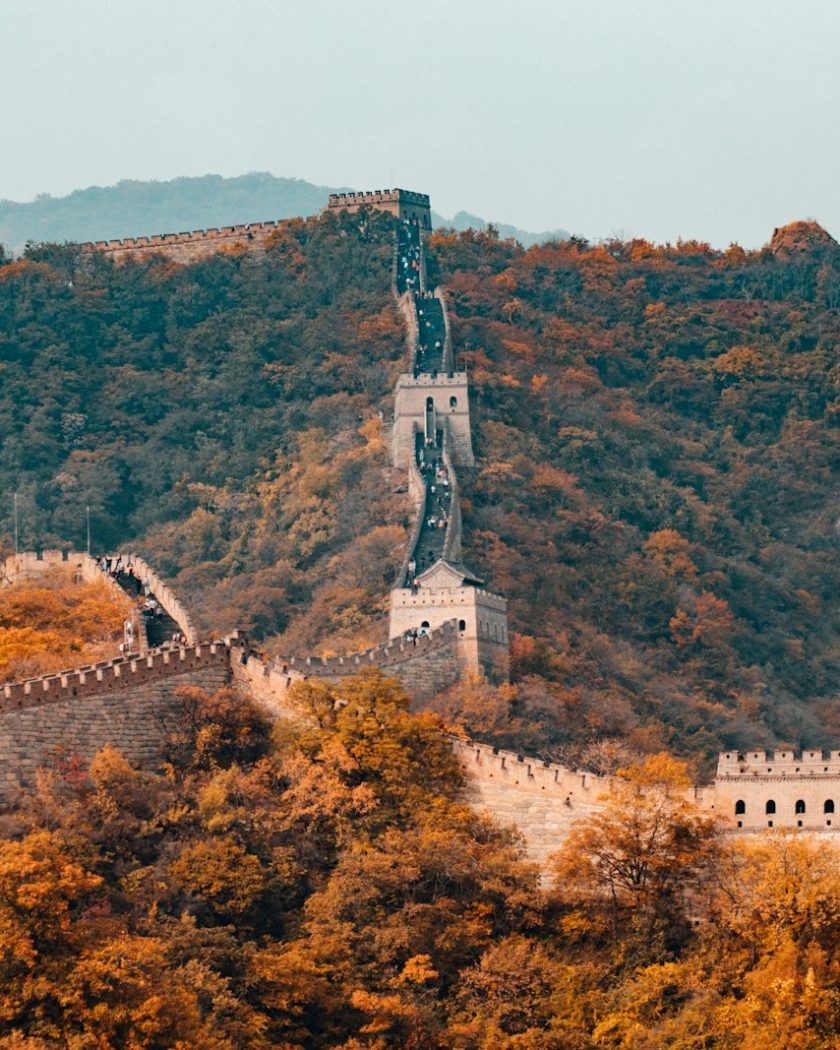
Stand on the restored walkway at Badaling or Mutianyu and the wall looks like one thing: a brick ribbon with crenellations, guardrails, and a queue of visitors in rented windbreakers. That image is so persistent that it has replaced the actual subject. The Great Wall was never a single wall, and it was not built by a single dynasty, or for a single reason.
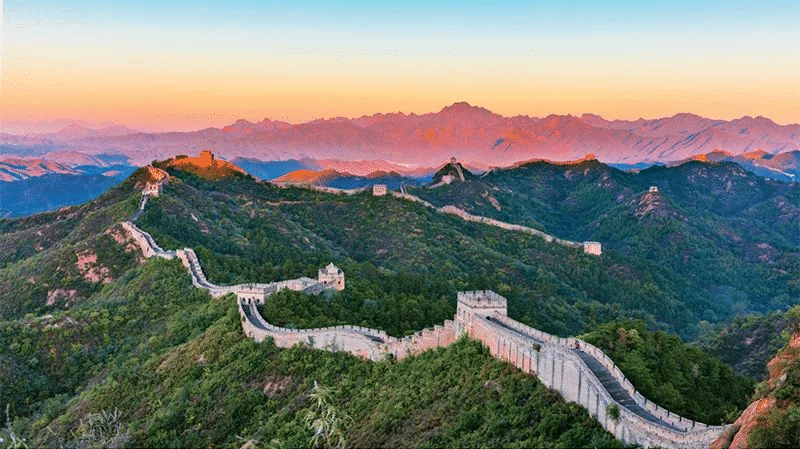
In 2012, after a five-year survey, China’s State Administration of Cultural Heritage announced that the remaining walls of every dynasty added up to 21,196.18 kilometers, spread across 15 provinces, autonomous regions and municipalities in some 43,721 recorded structures, sites and facilities. The parts most tourists see are Ming-dynasty sections built between the 14th and 17th centuries. They are roughly a third of the whole in length, and an even smaller share chronologically.
So why build it at all? The short answer is that a wall was a cheaper way to manage a difficult border than the alternatives. The longer answer involves horses, grain, beacon fires, customs receipts and several centuries of emperors improvising.
A border that moved for two thousand years
The earliest walls were not imperial projects. From roughly the 7th century BCE, rival states in what is now northern and central China threw up earthen barriers against each other. Some segments in Shandong appear to predate even that estimate, based on recent excavation work.
When Qin Shi Huang unified China in 221 BCE, his state already had a northern wall on its frontier. What the Qin did, and what later dynasties repeated, was link and extend existing walls into something closer to a continuous line against the Xiongnu. The Han pushed the line west into the Hexi Corridor, along the route that became known as the Silk Road. Successive states, including the Northern Wei, Northern Qi, Sui and Jin, maintained, moved or rebuilt sections as their frontiers and enemies changed.
The Ming (1368–1644) were the most ambitious builders. After driving out the Mongols, they faced a withdrawal to the steppe rather than a decisive defeat, and they invested heavily in fortifying the northern border. Most surviving timber-free, brick-and-stone wall that visitors climb today dates from this period, even though it sits on foundations and alignments that are far older.
The 2009 survey of the Ming wall gives a sense of scale. The line ran 8,851.8 kilometers from Hushan in Liaoning to Jiayuguan in Gansu, crossing 156 counties in ten provinces. Only about 6,260 kilometers of that was built wall. Another 360 kilometers were ditches and moats, and 2,232 kilometers were natural cliffs and ridges used as barriers, with the gaps filled in where needed. Long stretches of what we call “the wall” are simply mountains the builders decided to trust.
Why a wall, and not an army?
The strategic logic starts with mobility. Steppe cavalry could raid, withdraw, and disappear into grassland before a slow-moving infantry force arrived. Garrisoning the entire frontier with enough troops to stop them was ruinously expensive and still left gaps. A wall changed the terms of the problem: horsemen had to dismount, find a gate, bring ladders or battering equipment, and spend time that defenders could use to concentrate forces.
It was not impenetrable, and no serious historian claims it was. Walls were breached. Armies crossed at passes. The Ming fell in 1644 after rebels took Beijing and a Ming general opened the Shanhai Pass to Manchu forces. But the wall was not supposed to make invasion impossible. It was supposed to make raiding slower, riskier and less profitable, and to buy defenders time.
It also protected something less dramatic: farmland. Border communities needed uninterrupted planting and harvest cycles. Repeated raids destroyed crops and convinced villagers to flee or surrender. A walled, patrolled frontier offered enough stability for agriculture to continue, which in turn kept the local tax base alive.
The wall as a network, not a fence
The most useful way to picture the Great Wall is as a communications and logistics system with a wall attached. The Ming system combined the wall line itself with garrison towns, beacon towers and a relay network for messengers. The 2009 survey counted 7,062 watch platforms, 3,357 bastions built into the wall face, 5,723 beacon towers and 1,176 forts and passes in the Ming system alone.
Those numbers matter because they tell you what the wall was for. Beacon towers sent coded smoke and fire signals along the line, allowing a warning to travel hundreds of kilometers in hours rather than days. Watch platforms let soldiers observe movement on both sides. Garrisons behind the wall could hold supplies and troops ready to respond. A wall without this network would have been a costly fence; the network is what turned it into a border system.
Then there was trade. Nomadic economies needed salt, grain, cloth and iron goods; settled economies wanted horses, hides and livestock. Rather than trying to stop exchange, dynasties channelled it through designated passes, where officials could tax it, inspect it, register travelers, and close it as leverage when relations soured. The most famous passes, Shanhaiguan in the east and Jiayuguan in the west, were as much customs posts as fortresses. Trade control was not an afterthought attached to the wall; in some periods it was close to the point.
The myth that will not go away
Almost every visitor eventually asks whether the wall can be seen from space. The answer is no, not with the naked eye, and NASA has said so in plain terms about its own photographs. An image taken from the International Space Station in 2004 by Expedition 10 commander Leroy Chiao shows a stretch of wall in Inner Mongolia; NASA’s own caption notes that “the wall isn’t visible from the moon, and is difficult or impossible to see from Earth orbit without the high-powered lenses used for this photo.”
Astronauts have been saying this for decades. Apollo 12’s Alan Bean put it simply: from the Moon, “no man-made object is visible at this scale.” China’s first astronaut, Yang Liwei, orbited Earth 14 times in October 2003 and later said, “The Earth looked very beautiful from space, but I did not see our Great Wall.”
The myth is older than spaceflight. In 1754 the English antiquarian William Stukeley wrote of “the Chinese wall, which makes a considerable figure upon the terrestrial globe, and may be discerned at the Moon.” Ideas about Martian “canals” in the 19th century likely reinforced the intuition that a sufficiently huge construction must be visible across space. Children’s books and guidebooks recycled the claim for so long that it became common knowledge, which is precisely why it survives: it sounds like an obvious fact once you have heard it.
The wall is real, enormous and visible in satellite imagery, and from orbit it can be photographed with a long lens. It is simply narrow. A few meters of brick, seen from hundreds of kilometers up, fall well below the resolution of the human eye, and its color often blends into the ridges it follows.
What the wall actually teaches
If there is one thing to take away, it is that the Great Wall is a record of how an agricultural empire negotiated with a mobile pastoral world over two millennia. It was never finished. It was built, abandoned, overbuilt, moved and rebuilt as circumstances required, sometimes with packed earth, sometimes with stone and kiln-fired brick. It functioned simultaneously as a barrier, an early-warning system, a customs line, a road for moving troops and a statement of political authority.
That is also why the usual framing feels unsatisfying. “They built a wall to keep out invaders” is not wrong; it is just too small for the object. The wall was an attempt to make an unpredictable border predictable, using the technology of its time. It did not eliminate conflict, and it did not survive as a working system once the Ming fell and the Qing extended control north and west beyond it. But for centuries it was the most practical answer that successive governments could find, and the evidence of that effort still runs across fifteen provinces.
The next time someone tells you it can be seen from space, you have a better reply than “no”: it is 21,000 kilometers of walls, ditches and mountain ridges, most of which are not visible from the air, and it was never really one wall to begin with.
Sources: State Administration of Cultural Heritage survey results, 2012, reported by Guangming Daily (https://news.sciencenet.cn/htmlnews/2012/6/265230.shtm); China News Service, 2009 Ming Wall survey (https://www.chinanews.com.cn/cul/news/2009/04-20/1654103.shtml); NASA image article on the Great Wall (https://www.nasa.gov/image-article/great-wall/); BBC Sky at Night Magazine on the visibility myth (https://www.skyatnightmagazine.com/space-science/can-you-see-great-wall-china-from-space); TravelChinaGuide on reasons for construction (https://www.travelchinaguide.com/china_great_wall/facts/why-built.htm); The Archaeologist on defense, trade and dating (https://www.thearchaeologist.org/blog/the-role-of-the-great-wall-of-china-in-defense-and-trade); Max Planck Institute for the History of Science, Ming defense system project (https://www.mpiwg-berlin.mpg.de/research/projects/military-defense-system-great-wall-ming-dynasty); Beijing Municipal Cultural Heritage Bureau, Great Wall in Beijing (https://wwj.beijing.gov.cn/bjww/362771/362778/364326/index.html). Verified 30 October 2026.