
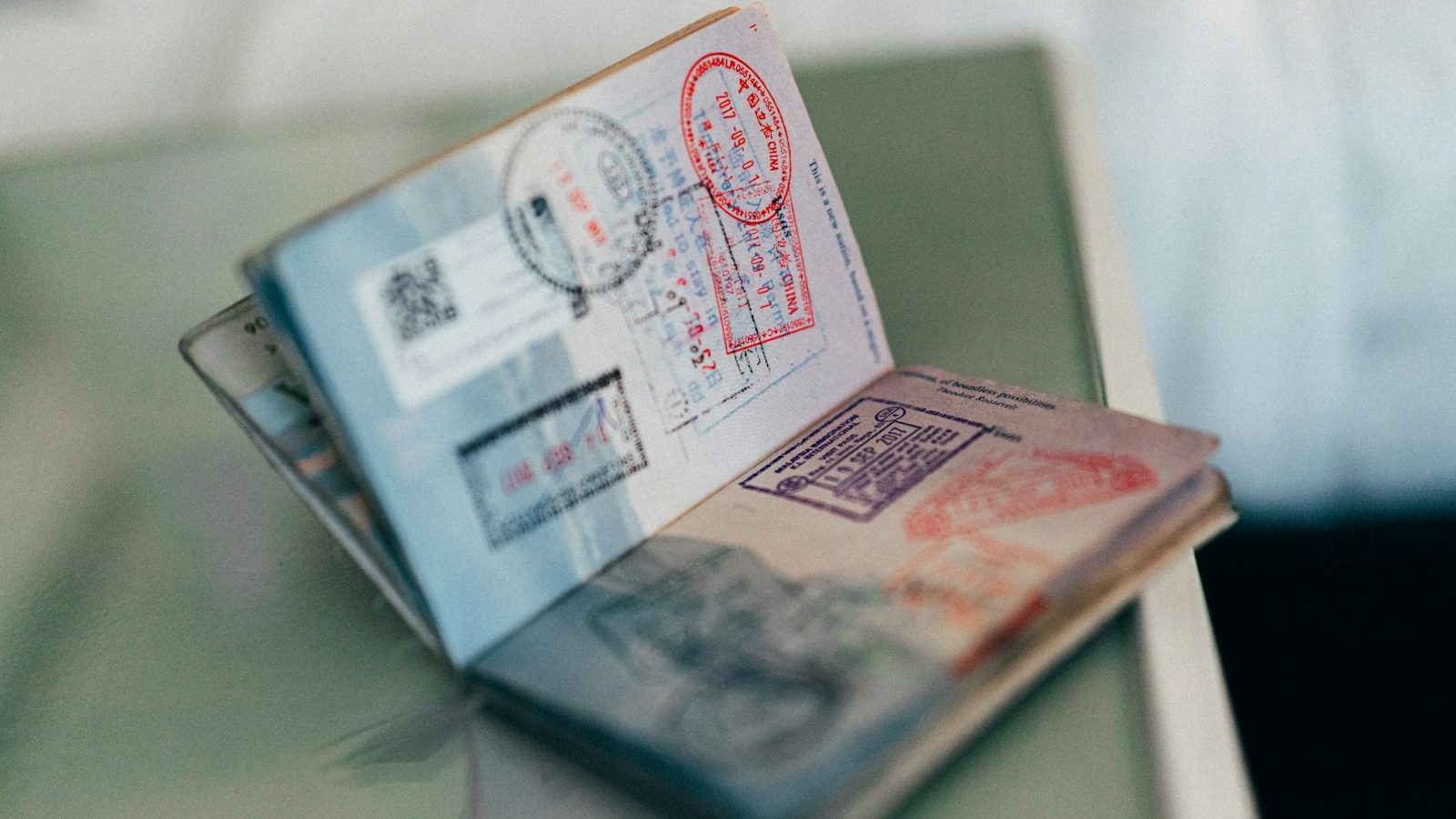
Few questions about China produce more contradictory answers than this one. A traveler who spent a week in Shanghai using ride-hailing apps and paying by phone may say it was easier than expected. A traveler who tried to book a train without a Chinese phone number, or found that a familiar website would not load, may say it was harder than anywhere they had been. Both are describing the same country.
The honest answer is that visiting China in 2026 is not uniformly hard or easy. It is hard in specific, predictable ways and easy in others, and most of the frustration comes from not knowing which is which. This guide separates the legal requirement (visas) from the practical ones (money, phone, language, transport, hotels), because each has a different fix.

Getting in: far easier than it used to be
This is the part that has changed most and where outdated information does the most damage. As of February 2026, China granted unilateral visa-free entry for up to 30 days to ordinary-passport holders from 50 countries, according to the National Immigration Administration’s published list. The list covers most of Europe — including the United Kingdom, France, Germany, Italy, Spain, and the Netherlands — plus Australia, New Zealand, Japan, South Korea, and a growing set of Latin American and Gulf states such as Brazil, Argentina, Chile, Peru, Uruguay, Saudi Arabia, and Kuwait. Entry is permitted for tourism, business, family visits, and transit.
A second route works for a wider group. China’s 240-hour (ten-day) visa-free transit policy applies to travelers from 57 countries, including the United States, Canada, and Mexico, who are passing through China to a third country or region. The NIA requires an ordinary passport and a confirmed onward ticket with a set date and itinerary, and allows entry through any of 65 open ports across 24 provinces, with travel permitted within designated areas. Tourism, business, and visiting relatives are all allowed during the stay; work, study, and news reporting still require a visa.
The practical implication: before applying for a tourist visa, check whether your passport is already on the list, and whether a transit through China fits your route. The rules change — the lists above are dated to 2026 — so verify your own nationality on the NIA site rather than trusting a blog post, including this one.
Paying: the steepest learning curve
China’s retail economy runs on two apps, Alipay and WeChat Pay, and both now accept international bank cards. Setup is possible before departure: install the app, complete passport identity verification, link a Visa, Mastercard, JCB, or American Express card, and you can scan merchant QR codes on arrival. Most visitors find Alipay the easier of the two to set up, with WeChat Pay useful as a backup because some small merchants and services lean toward WeChat.
The friction is not in the setup but in the edges. Fees and limits on foreign-card payments change with policy and depend on the card network, so treat any specific percentage or threshold quoted online — including in this article’s earlier drafts — as needing verification in the app at the time of travel. Some merchants accept only personal QR codes, some small stalls take cash only, and a card that works in one city may decline in another. Carry cash as a backup; a few hundred yuan in small notes solves most awkward moments.
Also expect identity checks. Payment apps are tied to real-name verification, which is why a passport matters at every stage — buying a SIM card, opening a payment account, checking into a hotel, and booking a train ticket.
The parts nobody warns you about
Phone numbers. A local number makes everything easier: restaurant bookings, delivery, ride-hailing, hotel registration systems, and app verification codes. Foreign SIMs often work for roaming but cannot receive the SMS codes Chinese services expect. Buying a Chinese SIM requires your passport, and tourist SIMs are usually short-term.
The internet. Many websites and services commonly used abroad are not reachable from mainland networks, including some Western search engines, news sites, and social platforms. Circumventing these restrictions is legally restricted, and enforcement has fallen on people who sell or operate circumvention tools more than on individual visitors; nonetheless, the safe assumption is that you should not rely on blocked services for anything essential. Set up alternatives in advance: local map and booking apps, offline maps, a downloaded translation app, and a messaging app that works.
Language. English is common in airports, international hotels, and major tourist sites, and rare in neighborhood restaurants, taxis, and local government offices. Translation apps with camera text recognition bridge most of the gap. Taxi drivers generally will not speak English, so having your destination written in Chinese characters is not optional.
Trains. High-speed rail is one of the most pleasant parts of traveling in China, and it is bookable in English through the official 12306 app and website. You need your passport number, and at the station you scan the passport itself at the gate rather than a paper ticket. Book early for popular routes around holidays.
Hotels. The old restriction that only “foreign-friendly” hotels could accept foreign guests has loosened considerably, but it has not disappeared uniformly, and smaller guesthouses in some regions still decline foreign passports or lack the registration system. Booking through major international platforms and confirming that foreign guests are accepted avoids most problems.
So how hard is it, really?
If your trip is a short stay in a major city, arriving on a visa-free entry, with a payment app set up and a hotel that takes foreign guests, China is now one of the easier destinations in Asia. If it is a longer independent trip through smaller cities, involving rural transport, homestays, and self-booked logistics, it is genuinely demanding — not because of hostility, but because the digital infrastructure assumes a Chinese phone number and identity, and the offline alternatives are thinner than in Europe or North America.
The drop in friction is visible in the numbers. In the first half of 2025, foreign nationals made 13.64 million visa-free entries into China, 71.2 percent of all foreign entries and a 53.9 percent increase year on year, according to the National Immigration Administration. That is a policy effect, not proof that everything is easy — but it shows that for many nationalities the legal barrier has largely gone.
The remaining barriers are practical, and almost all of them are solvable before you fly. That is the useful way to think about it: China is not difficult to visit. It is difficult to visit unprepared.
Sources: National Immigration Administration, “List of Countries Covered by Unilateral Visa Exemption Policies” (en.nia.gov.cn, compiled as of 17 February 2026) and “过境免签政策” transit policy page (nia.gov.cn, updated 20 August 2026); Xinhua/gov.cn, “Foreign arrivals in China continue to surge in H1 via visa-free expansion” (16 July 2025); Alipay and WeChat Pay in-app documentation for foreign-card linking (checked 2 November 2026); China Railway 12306 English site. Fee figures and hotel policies vary by city and change frequently — verify before travel.