

Walk into a small noodle shop in almost any Chinese city and there is a good chance nobody takes your order at a counter. A laminated QR code sits on the table. You scan it with WeChat or Alipay, the menu opens inside the app, you tap through your choices, pay, and a few minutes later a bowl arrives. The waiter may never speak to you. Cash is not refused, exactly, but handing over a 20-yuan note can trigger a brief search for change that suggests the shop has not done it in a while.
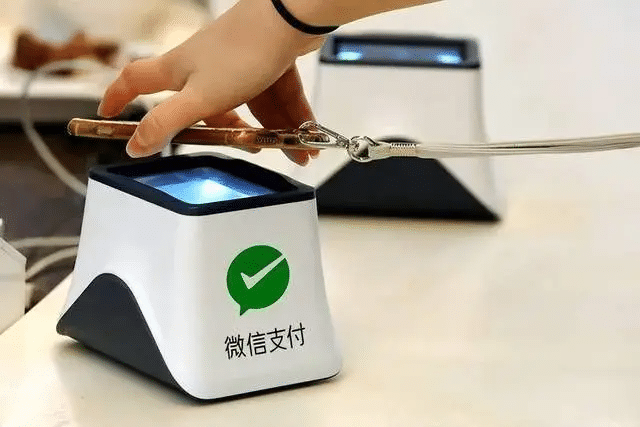
That tabletop card is a useful entry point for a bigger question. WeChat and Alipay started as a messaging app and an online payment service for a shopping platform. Today they are the layer through which a large share of Chinese people pay, book appointments, ride the subway, order meals, file tax paperwork and receive money from relatives. The shift is often described as China going cashless. That is too simple, and it misses what actually changed.
Payment as the front door to everything else
The People’s Bank of China (PBOC) said the country’s mobile payment penetration rate reached 86 percent by the end of 2023, the highest in the world. The domestic third-party mobile payment market moved about 373 trillion yuan in 2024, according to industry tracking, a 7.8 percent increase on the previous year. Those numbers describe volume, not behavior, but they explain why a QR code became the default door handle for services.
Once a payment app is installed and linked to a bank card, adding a function is cheap for the platform and nearly free for the user. Alipay and WeChat began letting merchants build lightweight “mini programs” inside the app, small applications that load without an install. Booking a hospital appointment, buying a train ticket, paying a utility bill, calling a ride, ordering groceries from a supermarket two streets away: many of these now happen in a screen that arrives after a scan, with payment already available at the end.
The consequence is that the local airport, the hospital, the district government office and the noodle shop all share one interface. For someone who grew up with separate apps, websites and card terminals, the consolidation is the interesting part, more than the absence of cash.
How the two apps differ
Alipay launched in 2004 as an escrow service for Alibaba’s marketplace, which meant it grew up around trust in online transactions, merchants and financial products. WeChat Pay arrived in 2013 inside a messaging app with an enormous base of daily users and almost no commerce history. Tencent’s advantage was social: people were already there to talk to friends and family, and paying a friend for dinner cost no extra step.
That difference still shapes usage. WeChat Pay feels like money moving between people and small sellers; it is the app for splitting a bill, paying a market vendor, or sending a gift. Alipay leans toward merchant transactions, city services and financial features. In practice most people keep both, because a shop or a service may accept one but not the other, and a red packet arrives where your friends are.
The red envelope is the clearest example of payment shaped by social custom. Paper envelopes of cash are a traditional Lunar New Year gift. WeChat turned the practice into a digital feature in 2014: users sent 16 million red envelopes that year, a number that grew to about 1 billion in 2015, according to IMD’s account of what became known as the red envelope war. The feature did something a discount campaign could not. It made linking a bank card feel like a social obligation rather than a financial setup step.
What did not disappear
Cash is still legal tender and the government has made a point of keeping it usable. In March 2024, the State Council issued a guideline calling for wider acceptance of bank cards, easier mobile payment for foreigners, and protection of cash use for people who depend on it. The PBOC said it would investigate and penalize businesses that refuse cash. In May 2024, Caixin reported that the central bank had fined seven businesses, including a KFC franchise in Wuxi, for rejecting cash payments, with penalties between 3,000 and 55,000 yuan.
That policy direction matters because the digital system has real costs for people outside the default user. China’s population aged 60 and above reached 310.3 million by the end of 2024, about 22 percent of the total. As of June 2025, 161 million people aged 60 and over were internet users, a penetration rate of 52 percent, compared with 79.7 percent for the population overall. Among older people, especially those in rural areas with less digital experience, a phone that must be charged, unlocked, kept logged in and updated is a fragile way to buy groceries.
Older users are not the only ones who encounter friction. Foreign visitors historically found the apps hard to set up, since linking a card required a Chinese bank account or a Chinese mobile number. That has eased considerably. Alipay and WeChat Pay now allow visitors to link international Visa and Mastercard cards without a local account, and the PBOC raised the single transaction limit for overseas travelers from 1,000 to 5,000 US dollars and the annual cap from 10,000 to 50,000 dollars. Ant Group has also enabled users of some overseas e-wallets, from countries including South Korea, Singapore, Thailand, Malaysia and Mongolia, to pay at Chinese merchants through Alipay+.
It is not frictionless yet. China Daily reported in October 2025 that active mobile payment users among inbound travelers exceeded 10 million in the first half of the year, with transaction counts up 162 percent year on year, while noting that foreign card support remains uneven in smaller cities and non-tourist areas, and that older and non-English-speaking visitors still struggle. Waiting staff sometimes cannot explain a failed payment, and identity verification by passport can be slow or awkward on a weak connection.
Why China ended up here and the West did not
The common explanation is that China “skipped” credit cards. There is something to it. In the 1990s and 2000s, card infrastructure was thinner outside major cities, while mobile phones spread fast and cheaply. When QR codes became usable on ordinary smartphone cameras, merchants could accept digital payment with a printed sheet of paper instead of a card terminal, a merchant account and a settlement cycle. The barrier to adoption collapsed for small sellers, which is exactly where cash dominates.
The United States and Europe took a different path. Card networks were already dense, contactless cards and terminals were convenient, and consumers had little reason to rewire their habits. Apple Pay and Google Pay added a phone to that existing rail rather than replacing it. The result is that a shopper in London or Chicago taps a card or a phone and is done in a second, without opening an app, scanning a code or confirming a payment pin.
In China, a typical QR payment takes a few seconds and requires the phone to be awake and the app open. It is slower than tapping a card. What compensates is reach: the same app that pays also holds the loyalty card, the ticket, the medical appointment and the friend you are splitting dinner with. Convenience accumulated at the platform level rather than at the register.
What outsiders should take from this
The most important correction is that China is not cashless, and the two giant apps are not simply wallets. They are the main interface between ordinary people and a dense set of everyday services, with payment as the connective tissue. That is why the QR code appears on a vegetable stall, a hospital kiosk, a temple ticket office and a street musician’s cardboard sign with equal confidence.
For visitors, the practical advice is modest: set up one app before arrival, keep cash as a backup, and expect the occasional shop that accepts only one of the two. For observers, the more useful question is not whether this is better or worse than cards, but what happens when the infrastructure of daily life concentrates in two private platforms, and when a fraction of the population cannot comfortably use it. That is the live debate inside China, and it is more revealing than the “cashless society” headline.
Sources: Xinhua on PBOC payment measures (https://english.news.cn/20240301/67dd0b2ce4994d4c855066698543e2d9/c.html); China Daily/Qiushi on the March 2024 State Council guideline (https://subsites.chinadaily.com.cn/Qiushi/2024-03/09/c_969604.htm); Caixin Global on fines for refusing cash (https://www.caixinglobal.com/2024-05-15/china-fines-kfc-and-other-businesses-for-rejecting-cash-payments-102196668.html); China Daily on inbound traveler payment data (https://global.chinadaily.com.cn/a/202510/21/WS68f6e140a310f735438b608e.html); China Daily on Ant Group’s services for foreign visitors (https://global.chinadaily.com.cn/a/202404/10/WS6615e862a31082fc043c1188.html); The Guardian on China’s payment transition (https://www.theguardian.com/world/2024/apr/29/china-slows-cashless-society-transition-cash-digital-currency-mobile-payment-system); IMD on the red envelope war (https://www.imd.org/research-knowledge/strategy/articles/the-uneasy-truce-between-alibaba-and-tencent-is-over/); CNNIC report via gov.cn (https://english.www.gov.cn/archive/statistics/202507/21/content_WS687dd259c6d0868f4e8f4501.html); gov.cn on the 60+ population (https://english.www.gov.cn/archive/statistics/202507/25/content_WS688325f4c6d0868f4e8f46da.html); China Internet Watch on 2024 mobile payment volume (https://www.ciw.news/p/payment-markets-overview). Verified 30 October 2026.